

Portraits of the overman: Paisiy of Hilendar
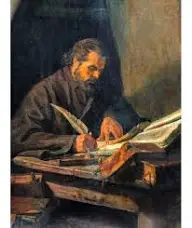
Paisiy of Hilendar
The monk who told the history of Bulgarians
Who is he?
Paisiy of Hilendar was a Bulgarian clergyman and national revivalist whose main contribution was the writing of History of the Slavs and Bulgarians.
Why is he an overman?
Paisiy transformed historical memory into a means of spiritual and national self-awareness. By writing History of the Slavs and Bulgarians in 1762, he did not merely compile information about the past, but articulated the need for Bulgarians to know and value their origins, language, and cultural traditions.
Short biography:
1722-1773
Paissius of Hilendar was born around 1722, probably in Bansko, into a family with ties to both commerce and the clergy. Around 1745, he entered the Hilandar Monastery on Mount Athos. The environment of Mount Athos gave him access to a rich literary tradition, but at the same time confronted him with the neglect of Bulgarian history and identity under Ottoman rule.
It was precisely in this context that Paisii wrote his History of the Slavs and Bulgarians, completed in 1762. The work is not merely a chronicle of the past, but a conscious effort to restore the historical self-confidence of the Bulgarians. Paissiy drew on various historical and ecclesiastical sources to present the history of the Bulgarian state, its rulers, saints, and scholars.
The significance of Paisii’s work extends beyond the contents of the book itself. History of the Slavs and Bulgarians began to be copied and disseminated, and its ideas reached various segments of Bulgarian society. In it, historical memory becomes a means of building collective self-awareness—a process that would later develop into one of the main strands of the Bulgarian National Revival.