
Portraits of the overman: Albrecht Dürer
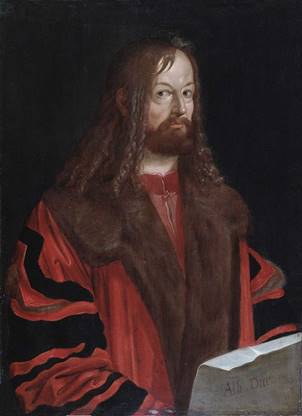
Albrecht Dürer
The artist who built a Renaissance bridge between the North and the South
Who is he?
Albrecht Dürer was a German artist, printmaker, and theorist of the Northern Renaissance.
Why is he an overman?
Albrecht Dürer is one of these people, who are not universally known, but whose actions have shaped an era and have pointed to a directions for the next one. He is one of the key figures of the Northern Renaissance and builds a cultural bridge between Italy and the northern European countries. His work deeply influenced thought and art in a period of rapid change and innovation.
He was highly ambitious and conscious of his own talent, openly asserting the dignity and importance of the artist at a time when painters were still often viewed as skilled craftsmen rather than thinkers. This confidence—sometimes read as pride—was paired with a strong work ethic and an almost obsessive attention to detail. His letters and self-portraits suggest a man concerned with morality, faith, and the meaning of human creativity.
Curious facts:
Dürer aggressively protected his “AD” monogram and even took legal action against people who copied his prints. That was a big deal in the early 1500s and helped establish the modern idea of artistic copyright.
One of his most famous self-portraits (from 1500) shows him facing forward in a pose traditionally reserved for Christ. This was a bold statement about the elevated status of the artist and the divine nature of creative talent.
His watercolor Young Hare and the woodcut Rhinoceros are among the most iconic animal images in art history. Ironically, Dürer never saw a rhinoceros in real life—his image was based on written descriptions and a sketch—yet it shaped how Europeans imagined the animal for centuries.
Short biography:
21 May 1471 – 06 April 1528
Born in Nuremberg, a thriving center of trade and craftsmanship, Albrecht Dürer was the son of a successful goldsmith, which gave him early exposure to fine workmanship and precision. He trained first under his father and later apprenticed with the painter and woodcut designer Michael Wolgemut, where he learned the technical skills that would shape his career, especially in printmaking.
Dürer was exceptional in his mastery of woodcut and engraving, transforming these media from relatively simple crafts into sophisticated forms of artistic expression. His prints—such as Apocalypse, Melencolia I, and Knight, Death, and the Devil—circulated widely across Europe, bringing him international fame during his lifetime. Unlike many artists of his era, Dürer carefully signed his works with a distinctive monogram, asserting authorship and elevating the status of the artist as an individual creator.
In his later years, Dürer devoted increasing attention to theoretical writing, producing influential treatises on geometry, measurement, and human proportions. These works reflected his belief that art was grounded in scientific principles as well as creative skill. When he died in 1528, Dürer left behind a legacy that reshaped printmaking, expanded the role of the artist, and firmly established Northern Renaissance art as equal in innovation and importance to that of Italy.
Important works:
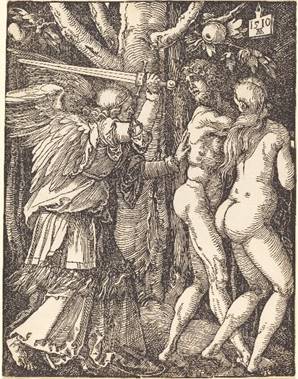
Expulsion from Paradise
British Museum, London, and others
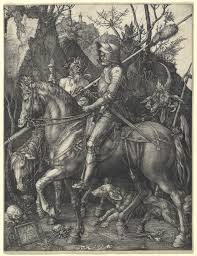
Knight, Death and the Devil
British Museum, London, and others
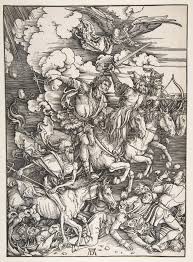
The Four Horsemen of the Apocalypse
The Metropolitan Museum of Art, New York, and others
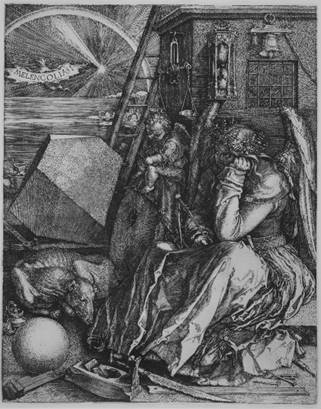
Melancholia I
The Museum of Fine Arts, Budapest, and others
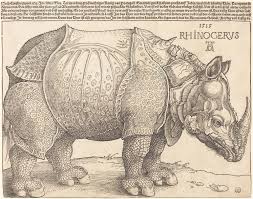
Rhinoceros
British Museum, London, and others
