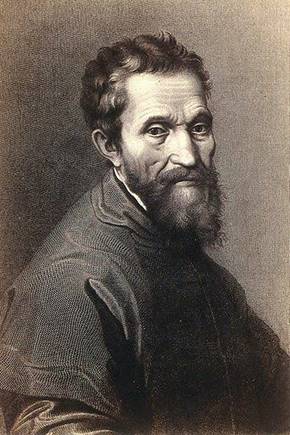
Portraits of the overman: Michelangelo Buanaroti
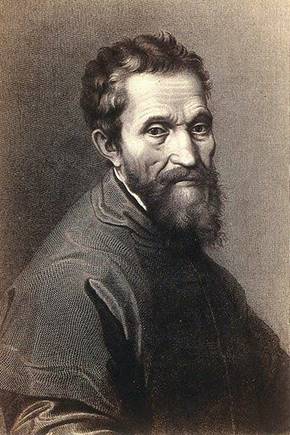
Michelangelo Buanaroti
The painter who saw the connection between man and God
Who is he?
Michelangelo is one of the most renowned painters of Italian Renaissance, known for his sculptures and painting the Sistine Chapel.
Why is he an overman?
Michelangelo shows the world that the place of man in the Universe is being equal to God. His art combines technical mastery and emotional charge as his figures look intense and alive. He revolutionized the way artists think about the human form and left a lasting legacy in sculpture and painting.
Curious incidents:
When he was young, he created a sculpture of a sleeping Cupid and made it look like an ancient Roman statue by burying it in the ground. It was sold as an antique.
His most famous sculpture, David, was made from a block of marble that other sculptors considered damaged.
He had an artistic rivalry with Raphael. Michelangelo was introverted and avoided public attention, while Raphael was sociable and popular. Raphael secretly entered the Sistine Chapel to look at Michelangelo’s work before it was finished. Amazed by his talent, Raphael decided to include his image in his School of Athens as Heraclitus.
Short biography:
6 March 1475 – 18 February 1502
Born in Caprese, he grew up in Florence and from early childhood showed his artistic talent. He studied under Domenico Ghirlandaio and later joined the the household of Lorenzo de’ Medici. Michelangelo quickly became known for his lifelike sculptures and inspiring paintings.
Michelangelo is one of the most remarkable sculptors in history, especially thanks to David, a symbol of strength and courage, and Pietà, which shows his ability to portray human expressions and emotions through stone. He also painted the ceiling of the Sistine Chapel in Vatican City, which is considered one of the greatest masterpieces of Western art.
Michelangelo never married or had children but he was close to his family, particularly his father and nephews. He lived simply despite earning fame and wealth with time. In his later years he developed a close spiritual friendship with the noblewoman and poet Vittoria Colonna.
Significant work:
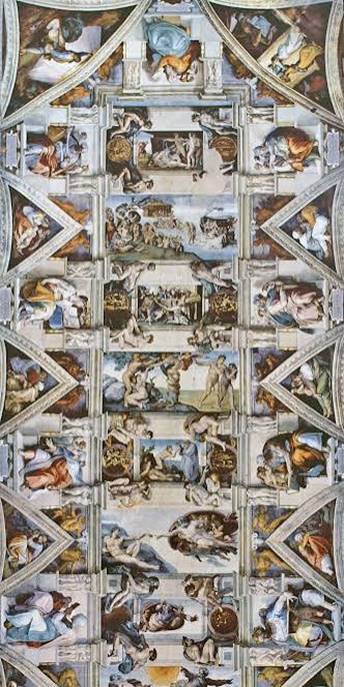
Sistine Chapel Ceiling
Sistine Chapel, Vatican City
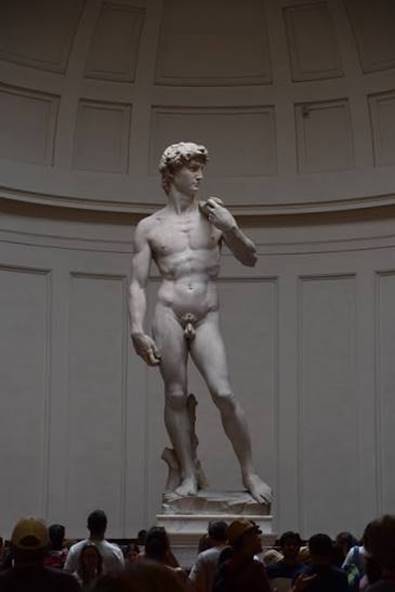
David
Galleria dell’Accademia, Florence
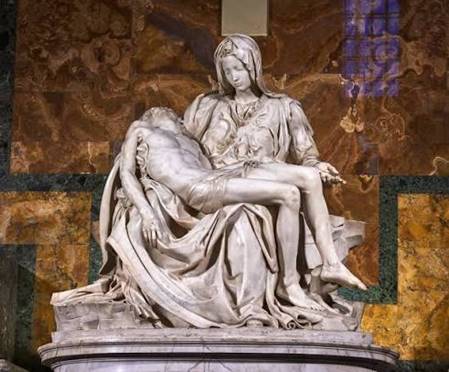
Pietà
St Peter’s Basilica, Vatican City
