
Portraits of the overman: Ivan Vazov
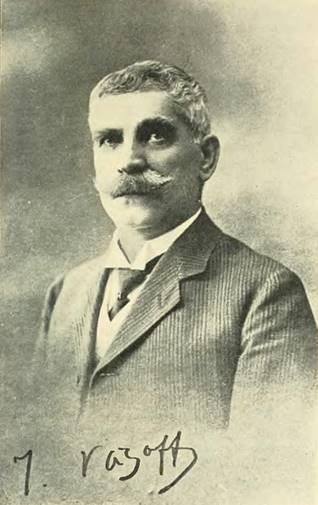
Ivan Vazov
The writer who knew Bulgaria the best
Who is he?
Ivan Vazov has been called the patriarch of Bulgarian literature because of the huge volume of his works dedicated to the nature, history and people of Bulgaria.
Why is he an overman?
Ivan Vazov managed to convey most fully what it means to be Bulgarian, thanks to his rich and varied creativity. He expresses in words almost every peculiarity of our nature, reveals our small but insidious flaws, and the huge outbursts of heroism inherent in the Bulgarian soul. He himself has lived through enough of the history of the country to understand most deeply the sufferings and dilemmas which this nation bears.
Vazov lived through the April Uprising and this burdened him with one of the most important missions of his time – to tell the story of those who did not. He was one of the few who knew them, shared their dreams, and had the gift to recreate them in literary works. Thanks to him, the images of Levski, Volov, Kableshkov and others reach us full-blooded and true. And it is only through works of art that we can gain insight into their spirit and understand their influence as individuals on others, which ultimately led to the attainment of an impossible freedom.
Quotes:
Tyrants, your struggle is in vain!
You cannot quench what’s not for quenching!
And from the light you quench today
Springs a volcano, fire belching.
There are no question marks in the grammar of love.
The mad, the mad – may they live!
Short biography:
09 July 09 1850 – 22 September 1921
Ivan Vazov was born in Sopot in a patriarchal and patriotic family. His father was a wealthy merchant, and his mother was engaged in public activities. The hero of the battle of Doiran Vladimir Vazov was his brother. Ivan then studied in Sopot, in Kalofer under the daskal Botyo Petkov, and later in the Plovdiv High School. There he learned French and was influenced by writers such as Victor Hugo and Alphonse de Lamartine.
He spent some time in Romania, but gave up work as a merchant and lived with the Bulgarian emmigrants in the tavern of Stranjata. He returned to Bulgaria, where he worked as a teacher and took part in revolutionary activities, but after the outbreak of the April Uprising he emigrated back to Romania. There he also published his first book of poems, “Flag and Gusla”.
After the Liberation he worked in the administration in Ruse and as a judge in Berkovitsa. He moved to Plovdiv, where he had a rich creative period and wrote some of his most important works, such as “Epic of the Forgotten” and “Unwanted-unloved”. Between 1887 and 1888 he wrote “Under the Yoke” while in exile in Odessa. After his return to Bulgaria, he served as Minister of National Education in the third government of Konstantin Stoilov.
Vazov experienced the Balkan Wars, the First World War and the national catastrophes that followed. In 1917 he was nominated for the Nobel Prize, but it is believed that rivalry with younger writers from the Thought Circle may have negatively influenced his candidacy. Long since declared a People’s Poet, his 70th birthday was celebrated in the country. He died a year later of a heart rupture.
Important works:
Under the Yoke
Epic of the forgotten
What cannot be quenched shall not be quenched
Svetoslav Terter
