
Portraits of the overman: William Gladstone
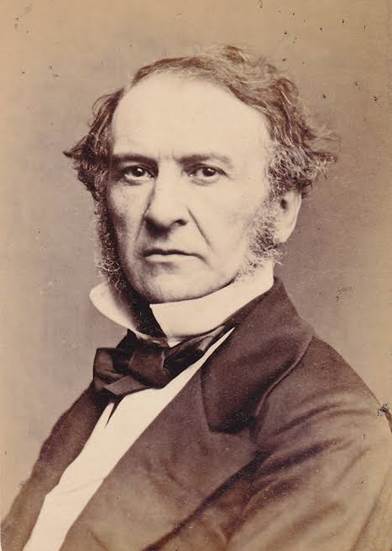
William Gladstone
The politician who unleashed liberalism
Who is he?
William Gladstone was one of the most prominent political figures of the Victorian era, serving as Prime Minister of the United Kingdom across four separate terms between 1868 and 1894.
Why is he an overman:
William Gladstone made liberalism a dominant force in Britain. He rejected cold realpolitik in favor of ethical national conduct. His passionate support for the Bulgarian people during the Eastern Crisis of 1876 is celebrated as one of the most famous moral crusades in modern diplomatic history.
Gladstone was widely renowned for his formidable intellect and spellbinding public speaking skills. At the same time, his unbending moral seriousness and complete lack of casual humor often made him appear stern, overbearing, and intimidating.
Curious incidents:
One of the most intense and controversial aspects of Gladstone’s private life was his nocturnal “rescue work” among London’s sex workers. Driven by deep religious convictions, he would walk the dark streets of London at night, inviting prostitutes into his home for tea and conversation, offering them money, and helping place them in rehabilitation shelters.
The rivalry between William Gladstone and Benjamin Disraeli was Victorian Britain’s greatest political feud, defined by a deep personal antipathy and contrasting worldviews—Gladstone being a stern, deeply moralistic Liberal, and Disraeli a witty, flamboyant Conservative. They alternated as Prime Minister while constantly sparring in Parliament, where Disraeli’s devastating charm won the affection of Queen Victoria while Gladstone’s righteous moral crusades ultimately turned public opinion against his rival.
Quotes:
Nothing that is morally wrong can be politically right.
Liberalism is trust of the people tempered by prudence. Conservatism is distrust of the people tempered by fear.
Short biography:
29 December 1809 – 19 May 1898
William Ewart Gladstone was born in Liverpool to a wealthy merchant and slave-owner family of Scottish descent. Gladstone was educated at Eton College and Christ Church, Oxford. Initially entering Parliament in 1832 as a high Tory, his early conservative views gradually shifted toward liberalism. Over his remarkable six-decade political career, he transformed into the leader of the Liberal Party, earning the popular moniker “The Grand Old Man” for his moral fervor, legendary oratorical skill, and commitment to free trade, administrative reform, and budget control.
Gladstone’s personal life was deeply shaped by his profound Anglican faith. In 1839, he married Catherine Glynne, with whom he shared a devotionally close and mutually supportive marriage lasting nearly sixty years; together they raised eight children. Despite his demanding political duties, Gladstone devoted immense time to philanthropic endeavors.
As Prime Minister, Gladstone oversaw major progressive legislation, including the Education Act of 1870, the secret ballot, and the expansion of voting rights through the Third Reform Act. His later political career was overwhelmingly defined by his crusade for Irish Home Rule, an issue so contentious that it ultimately split the Liberal Party. Outside of politics, he was an extraordinarily disciplined intellectual who read over 20,000 books in his lifetime, published extensive scholarship on Homer, and found physical relief from statecraft through his famous hobby of felling trees on his Hawarden estate.
