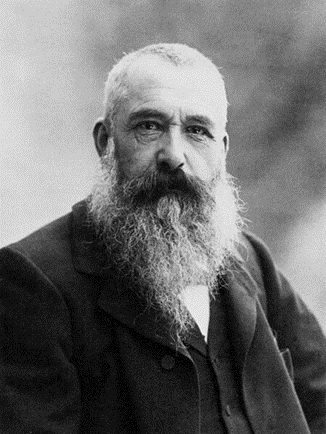
Portraits of the overman: Claude Monet
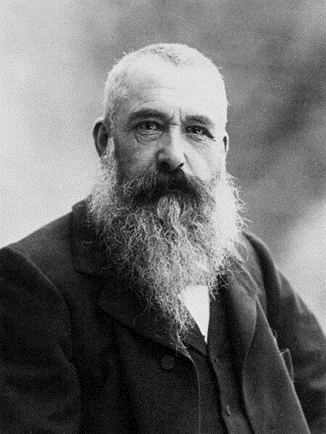
Claude Monet
The painter who created Impressionism
Who is he?
Claude Monet is a French artist whose painting Impression, Sunrise gave the name to the Impressionism movement.
Why is he an overman?
Claude develops a new direction in painting by studying light in depth and letting it shine in his palette. His works are gentle and beautiful, deep and powerful. His art shows a great connectedness with nature and understanding how the human spirit can merge with it. Claude feels an especially strong love to flowers and they give him the inspiration to have a vibrant personal and artistic life.
Claude was a complex and passionate individual, often described as both sensitive and stubborn. He had a strong will and an independent spirit, which helped him persevere through years of poverty, criticism, and personal tragedy. He reacted emotionally to what he saw and his inner light is also visible on his paintings.
Quotes:
Colour is my day‑long obsession, joy, and torment.
Everyone discusses my art and pretends to understand as if it were necessary to understand when it is simply necessary to love.
Every day I discover more and more beautiful things. It’s enough to drive one mad. I have such a desire to do everything, my head is bursting with it.
Short biography:
14 November 1840 – 5 December 1926
Born in Paris, Claude Monet grew up in the coastal town of Le Havre, where he began drawing as a young boy. Initially known for his caricatures, he later studied under landscape painter Eugène Boudin, who introduced him to painting outdoors, a practice that would become central to his work and to Impressionism as a whole.
Throughout his life, Claude remained committed to exploring how light and weather transformed his subjects. He often painted the same scenes at different times of day or in varying seasons. Claude was known to be intensely focused on his work—sometimes to the point of obsession—and he had little patience for distractions when he was painting. He often demanded complete solitude while working, believing that capturing the perfect light or atmosphere required total immersion.
He married Camille Doncieux in 1870, who had previously served as a model for several of his early paintings. The couple had two sons, Jean and Michel. Monet deeply loved Camille, but died in 1879 after a long illness. After her death, Monet formed a relationship with Alice Hoschedé, the wife of one of his patrons. Alice and her six children moved in with Monet and his sons, and after the death of Alice’s husband, they eventually married in 1892.
He at the age of 86, leaving behind a vast body of work that continues to be celebrated around the world.
Notable work:
Impression, Sunrise
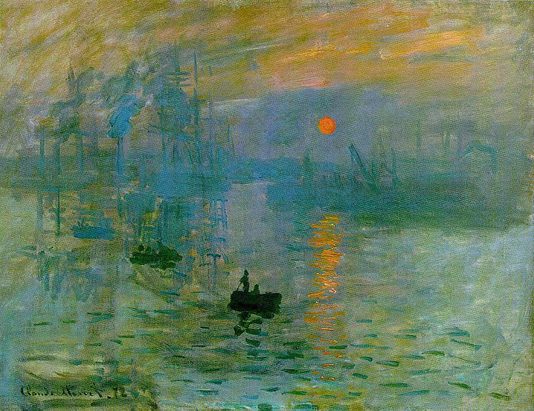
Musée Marmottan Monet, Paris
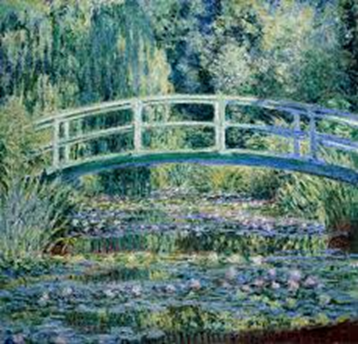
Water Lilies and the Japanese Bridge
Princeton University Art Museum, Princeton
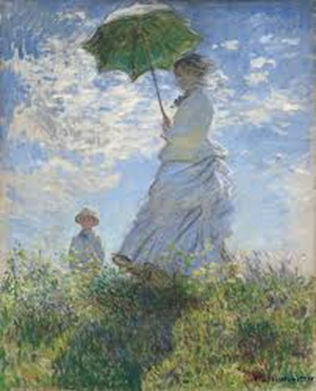
Woman with a Parasol – Madame Monet and Her Son
National Gallery of Art, Washington D.C.
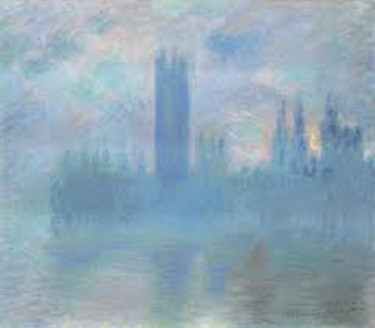
The Houses of Parliament, London
Art Institute of Chicago, Chicago
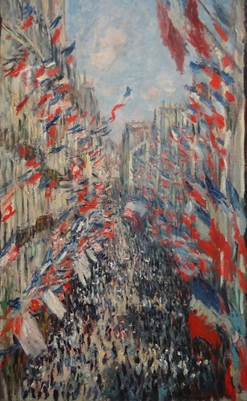
The Rue Montorgueil in Paris
Musée d’Orsay, Paris
